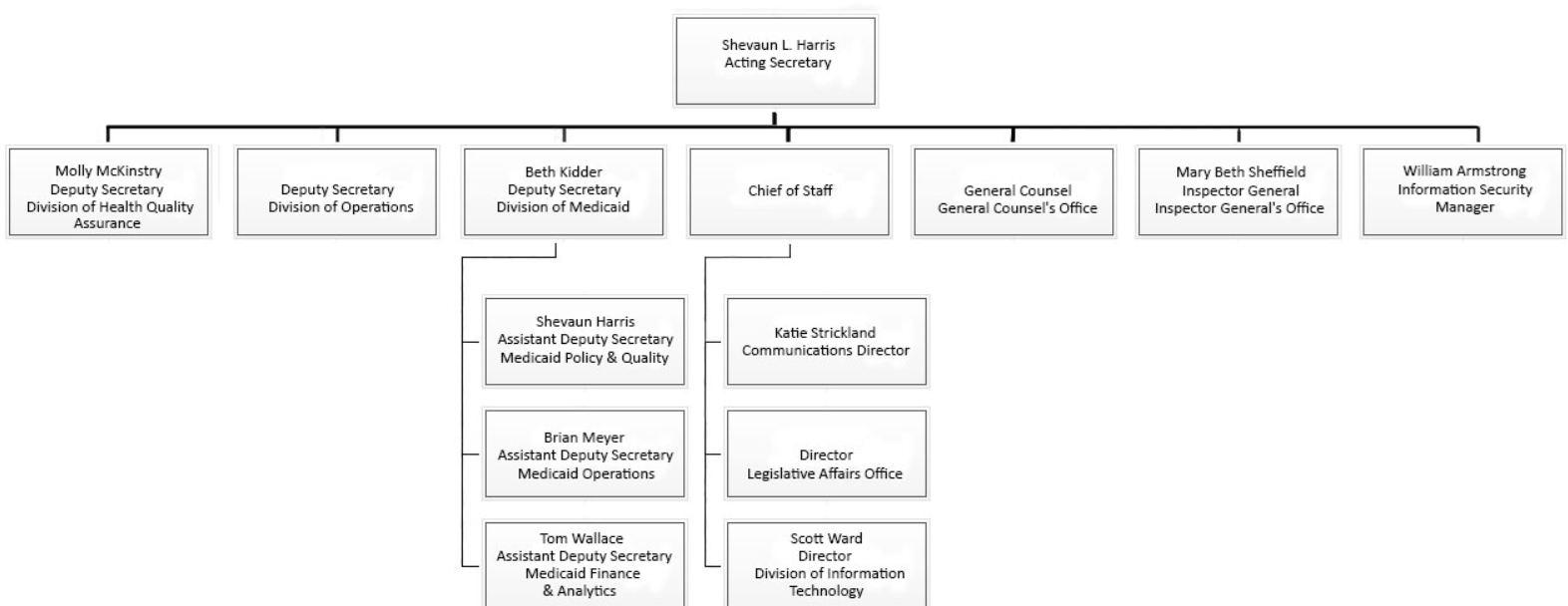
Focus of the agency the Agency for Health Care Administration
Our Agency was statutorily created by Chapter 20, Florida Statutes as the chief health policy and planning entity for the state. We are primarily responsible for the state’s estimated $25.2 billion Medicaid program that will serve a projected 4.27 million Floridians in SFY 2016-17, the licensure of the state’s 48,500 health care facilities and the sharing of health care data through the Florida Center for Health Information and Policy Analysis.
This year we are working to continue to reduce the number of uninsured across the state, to enhance our ability to target fraudulent providers, to reduce unnecessary regulation, and to reduce administrative costs in order to ensure that dollars go to serve patients and more.
Focus of the agency the Agency for Health Care Administration
From wikipedia
The Florida Department of Elder Affairs (DOEA) is the Florida government agency focused on senior citizens. As described in the Older Americans Act, it is the state’s unit on aging. It oversees the Office of Public and Professional Guardians.[1]
The department’s creation was approved in a 1988 constitutional amendment under the name Department of Elderly Affairs[2] but did not begin operations until January 1992.[3] Governor Lawton Chiles, who established the department[4], started calling it Elder Affairs since he thought Elderly Affairs was less dignified.[5] The department started with just six employees and some volunteers.[6] E. Bentley Lipscomb was the first secretary for the department.[5]
From the agency
Florida is home to nearly 5.5 million residents age 60 and older and currently ranks first in the nation for the 65+ populations. As our senior population continues to increase, Florida’s future is linked to the financial, health, and physical security of our elder population.The Department provides most direct services through its Division of Statewide Community-Based Services, which works through the state’s eleven Area Agencies on Aging and local service providers to deliver essential services to a vital segment of the population. The Department also directly administers a wide range of programs, ranging from the Long-Term Care Ombudsman Program, Office of Public and Professional Guardians, and the Livable Florida Initiative to SHINE (Serving Health Insurance Needs of Elders) and CARES (Comprehensive Assessment and Review for Long-Term Care Services).The Department recognizes that individuals age differently, and therefore the state’s residents do not each need the same kind of care or services as others the same age. Some individuals may suffer from chronic conditions that began long before they reached age 60, while others may be able to live their entire lives without ever needing long-term medical or social services. One of the Department’s highest priorities is reducing the need for many elders to be placed in nursing homes and other long-term care facilities. Ultimately, the goal is to efficiently use resources to ensure that the greatest number of elders possible get to spend their golden years living healthy, active, and fulfilling lives in their communities. Mission Statement: To promote the well-being, safety, and independence of Florida’s seniors, their families, and caregivers. Vision: For all Floridians to live well and age well
The goal of this program is to support the provision of nutritious meals and / or snacks served to community-based adults attending adult day care centers. The nutritious meals will support and possibly improve their nutritional status, enabling them to prolong living in their own community.
Community Care for the Elderly (CCE) Program
Eligible clients may receive a wide range of goods and services, including: adult day care, adult day health care, case management, case aide, chore, companionship, consumable medical supplies, counseling, escort, emergency alert response, emergency home repair, home-delivered meals, home health aide, homemaker, home nursing, information and referral, legal assistance, material aid, medical therapeutic services, personal care, respite, shopping assistance, transportation, and other community-based services.
Comprehensive Assessment and Review for Long-Term Care Services (CARES)*
Comprehensive Assessment and Review for Long-Term Care Services (CARES) is Florida’s federally mandated pre-admission screening program for nursing home applicants. Federal law mandates that the CARES Program perform an assessment or review of each individual who requests Medicaid reimbursement for nursing facility placement, or who seeks to receive home and community-based services through Medicaid waivers like Familial Dysautonomia Waiver, and Statewide Medicaid Managed Care Long-Term Care Program. Any person or family member can initiate a CARES assessment by applying for the Medicaid Institutional Care Program (ICP). Assessments are completed at no cost to the clients.
Emergency Home Energy Assistance for the Elderly Program (EHEAP)
The Emergency Home Energy Assistance for the Elderly Program (EHEAP) assists low-income households, with at least one person age 60 and older, when the households are experiencing a home energy emergency. A home energy emergency may result from a delinquent utility bill, lack of fuel or wood, or the receipt of a shut off notice. Payments are for home heating or cooling and other emergency energy-related costs during the heating (October-March) and cooling (April-September) seasons. Eligible households may be provided one benefit per season, up to $600 per season. Payments are made directly to the vendor or by a two-party check to the vendor and client for electricity, natural gas, propane, fuel oil, kerosene, or wood.
Program of All-Inclusive Care (PACE)*
The PACE program provides voluntary managed long-term care programs to address the increase in state expenditures for long-term care services and to meet consumer needs. The program is implemented in consultation with the Agency for Health Care Administration. PACE targets individuals eligible for Medicaid nursing home placement, and provides a comprehensive array of home- and community based, long-term care services as well as all Medicare (acute care) services. Services are typically delivered in an adult day health care setting.
Statewide Medicaid Managed Care Long-term Care Program (SMMC LTC)*
SMMC LTC is designed to provide home and community-based services to Medicaid recipients who are 65 years of age or older, or age 18 or older and eligible for Medicaid by reason of a disability; and determined to require nursing facility level of care. Created by Florida Legislature in 2011, SMMC LTC is a way to receive long-term care services, including nursing home and in-home care services, in a managed care setting. Managed care is a term for the process of how health care organizations manage the way their enrollees receive health care services. Managed care organizations work with different health care providers to offer quality health care services to ensure enrollees have access to the health care providers they need.
Older Americans Act Programs
Multiple programs, including Supportive Services, Congregate Meals, Home-Delivered Meals, Preventive Health, Family Caregiver Support and other programs
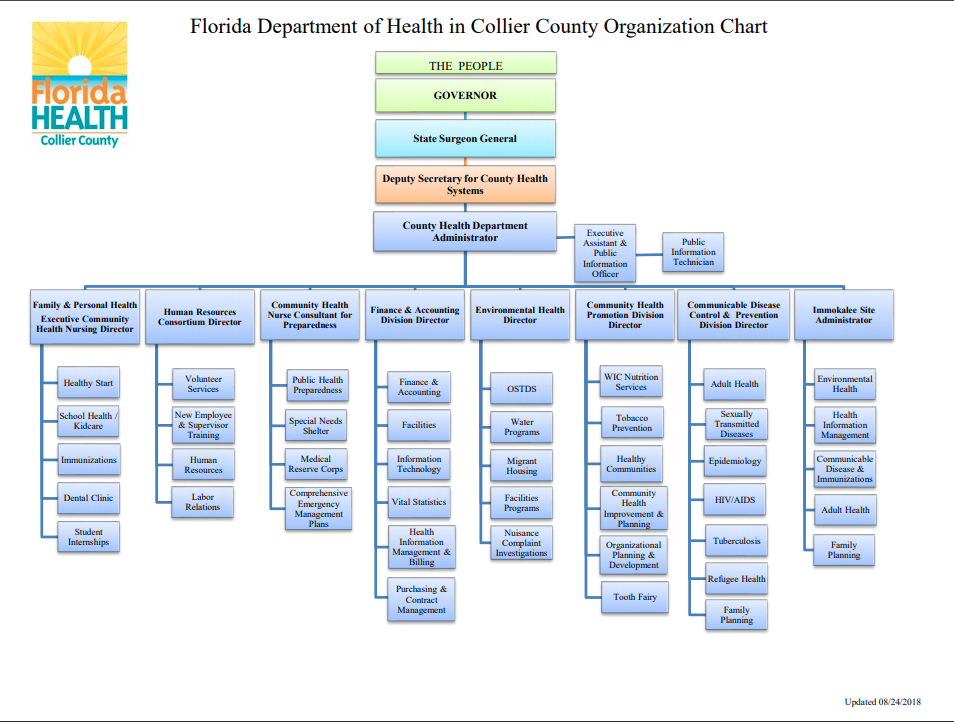
The Florida Department of Health is responsible for protecting the public health and safety of the residents and visitors of the state of Florida. It is a cabinet-level agency of the state government, headed by a state surgeon general who reports to the governor. The department has its headquarters in Tallahassee.[1]
During the 1996 legislative session, the beleaguered Florida Department of Health and Rehabilitative Services was reconstructed as two entities: the Department of Health and the Florida Department of Children and Families.[2]
The Florida Department of Health (FDOH) was established by the Florida Legislature in 1996; however, public health has its roots in Florida dating back to 1888 with the creation of the Florida State Board of Health. In 2007, the first-ever State Surgeon General was established to spearhead the efforts of FDOH, thereby designating a health officer to oversee all matters of public health. The Surgeon General’s role is to be the state’s leading advocate for wellness and disease prevention.
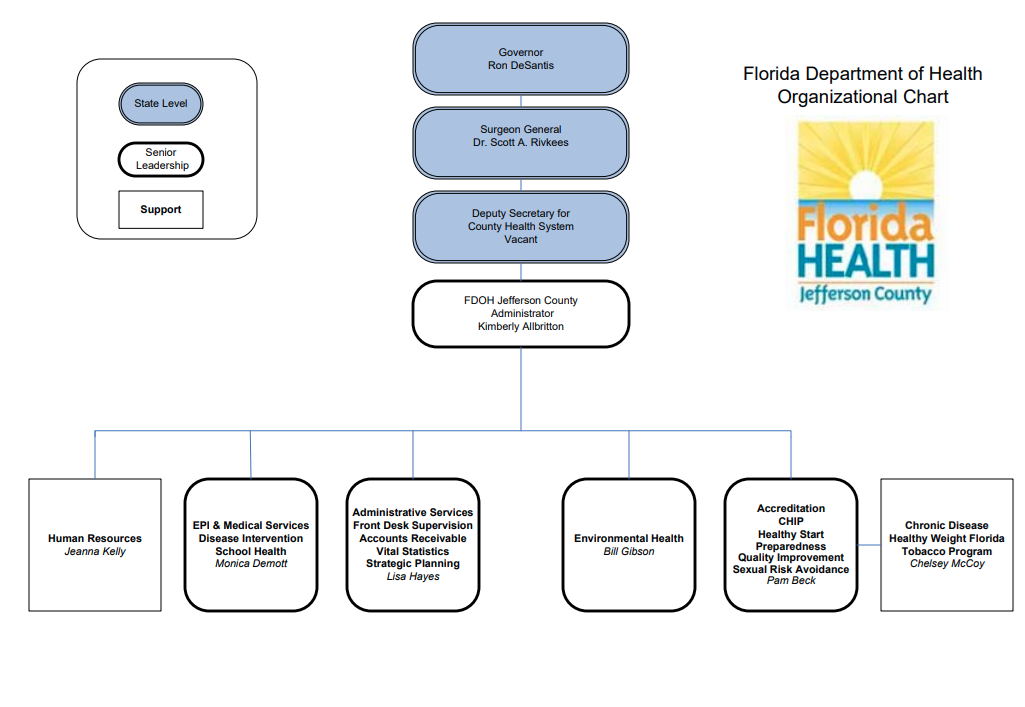
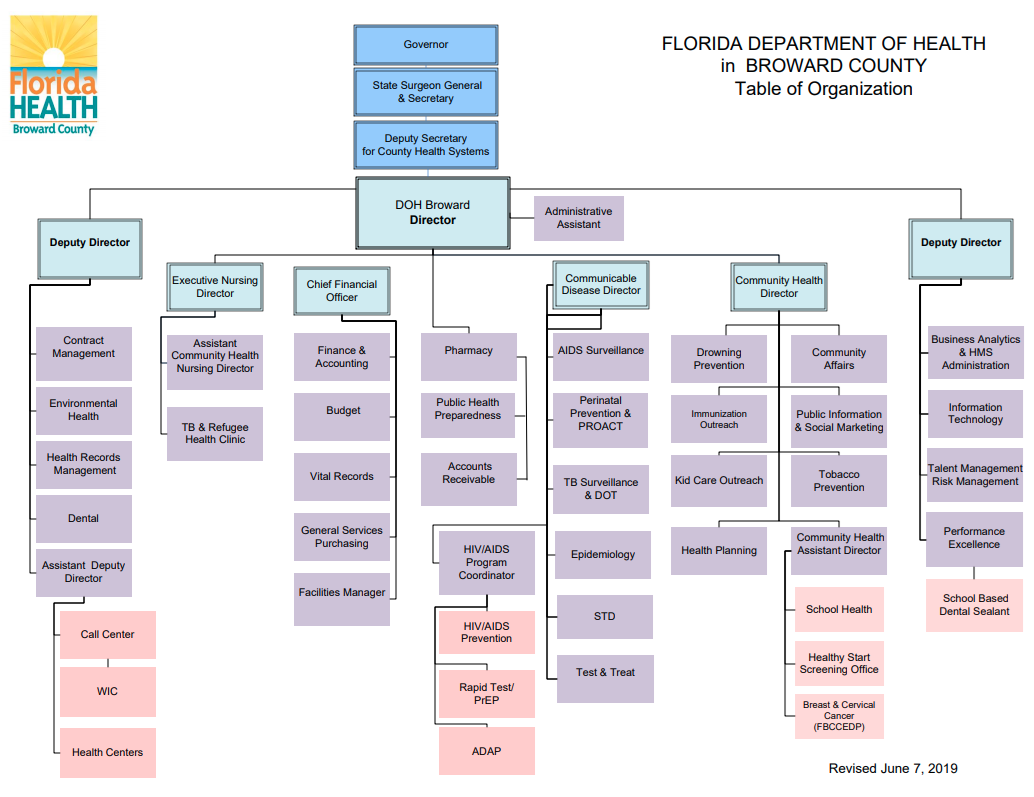
FDOH is an executive branch agency, established in section 20.43, F.S. FDOH is led by a State Surgeon General, who serves as the State Health Officer and is directly appointed by Florida’s Governor, and confirmed by Florida’s Senate. FDOH has three deputy secretaries that oversee all of its business and programmatic operations.
FDOH is comprised of a state health office (central office) in Tallahassee, with statewide responsibilities; Florida’s 67 County Health Departments (CHDs); 22 Children’s Medical Services (CMS) area offices; 12 Medical Quality Assurance (MQA) regional offices; nine Disability Determinations regional offices; and three public health laboratories. Facilities for the 67 CHDs are provided through partnerships with local county governments. These 67 CHDs have a total of 255 sites throughout the state, providing a variety of services, and ranging from small to large in location size.
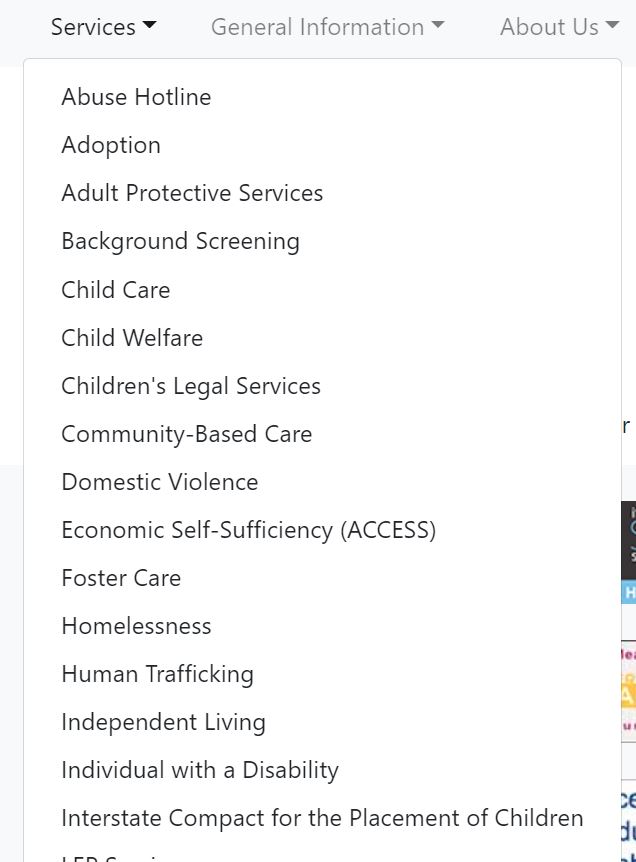
The mission of the Department of Children and Families is to work in partnership with local communities to protect the vulnerable, promote strong and economically self-sufficient families, and advance personal and family recovery and resiliency. Ch.20.19 F.S.
Community-Based Care is an initiative of DCF to improve its Child Welfare and Foster Care Services by contracting with local not-for-profit social services agencies through a competitive procurement process designed to engage community stakeholders. Its goals are to increase accountability, resource development, local community ownership, and system performance. [3]